14 February 2022

Is soy milk safe? Oestrogen, breast cancer and soy – the answers…

Do soy products affect breast cancer risks and does soy help or hinder recovery from breast cancer? And what of soy milk specifically? Is it safe?

Despite years of research and clinical evidence these questions still seem confusing to many. So this week, a research and experiential soy summary, then the soy milk specifics; plus a bonus - the role of oestrogen in COVID, but first
    Thought for the day

The person who asks a question

Is a fool for one minute.

The person who does not ask a question

Is a fool for life.

         Confucious


THE BASIC FACTS

The activity of most breast cancers are influenced by hormonal levels, especially the main female sex hormone oestrogen – basically more oestrogen is bad, less is better. Oestrogen is produced within the body and also can be taken in via common foods we eat; the phyto-oestrogens. 
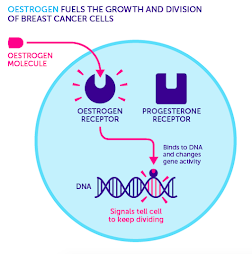
How oestrogen influences breast cancer is by attaching onto the breast cancer cells and stimulating their activity. 

Some compounds can block this interaction; the oestrogen blockers. 

Some phyto-oestrogens stimulate breast cancer, some act as oestrogen blockers.

So the effect oestrogen has on breast cancer is a combination of the amount produced within the body plus any oestrogen-like foods consumed, minus the mitigating effect of any oestrogen blockers.

But now, consider this - most breast cancers occur after menopause when the ovaries have stopped producing oestrogen, so where does the oestrogen come from? 

Is it only from the outside? Well, no, some still comes from the body - from fatty tissue, muscle and breast cells. But also, breast cancer cells produce their own oestrogen that then can go on to stimulate more cancer growth! 

So the question is, what can be done to block the adverse effects of oestrogen? 

There are 2 possibiities

1. Blocking the adverse effects of oestrogen

In mainstream medicine a number of drugs are used as oestrogen blockers – the oldest being Tamoxifen, while more recent ones include Arimidex, Aromasin and Femara that are only suitable for women who have completed menopause.
And what about phyto-oestrogens? 

Do they act as oestrogen stimulants or as oestrogen blockers? 

In previous posts the research evidence has been made clear. 

Soy products are effectively oestrogen blockers. 

But then the question of what type of soy is OK for you to eat?

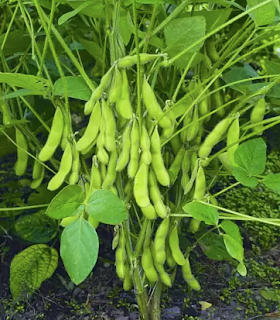
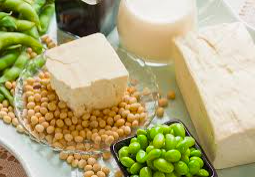
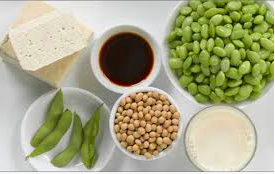
Minimally processed soy foods like cooked soybeans, tofu, tempeh are all OK. 

Highly processed soy, not so good; in fact better to minimise or avoid foods based upon Textured Soy Proteins like veggie sausages, mock meats and so on.


2. Stopping breast cancer cells from producing oestrogen

It turns out oestrogen is produced in breast cancer cells using 2 enzyme pathways. In fact, inhibiting this oestrogen production has been shown to be more effective than just trying to block the effects of the estrogen, “suggesting that the inhibition of estrogen synthesis is clinically very important for the treatment of estrogen-dependent breast cancer.”

There are drugs that do this – the common aromatase inhibitors are letrozole, anastrozole and exemestane. But how about this? The plant world is so amazing! Turns out soy phytoestrogens not only is a oestrogen blocker, it also reduces aromatase production. 

In a 2015 paper, the authors concluded “In general, phytoestrogens act as aromatase inhibitors by (a) decreasing aromatase gene expression, (b) inhibiting the aromatase enzyme itself, or (c) in some cases acting at both levels of regulation.”

Lephart ED. Modulation of Aromatase by Phytoestrogens. Enzyme Res. 2015;2015:594656. doi:10.1155/2015/594656


THE SPECIFICS – SOY MILK and BREAST CANCER RISKS

What does the research offer? In a randomised study, Japanese women were asked to add 400ml per day of soy milk to their diet or not for just 2 months. 400ml is quite a lot! Oestrogen levels dropped about a quarter in the soy milk supplemented group. 

Nagata C et al. Effect of soymilk consumption on serum estrogen concentrations in premenopausal Japanese women. J Natl Cancer Inst. 1998 Dec 2;90(23):1830-5. 

Japanese women live in a culture where soy is a common food, so what about in America where it is not? 

In a small study, women aged 22 – 29 consumed 350 ml soy milk and within a month halved their circulating oestrogen levels. 

Importantly, the oestrogen levels stayed down for a month or two even after the subjects stopped drinking soy milk, which suggests you may not need to consume soy daily to gain the cancer protective benefit.

The authors concluded “These results suggest that consumption of soya diets containing phytoestrogens may reduce circulating ovarian steroids and adrenal androgens and increase menstrual cycle length. 

Such effects may account at least in part for the decreased risk of breast cancer that has been associated with legume consumption.”

Lu LJ,et al. Effects of soya consumption for one month on steroid hormones in premenopausal women: implications for breast cancer risk reduction. Cancer Epidemiol Biomarkers Prev. 1996 Jan;5(1):63-70.

Isoflavins and breast cancer risk

Still not fully confident? Isoflavones are only one of the major phyto-oetrogens, so this research is not the same as testing soy as a whole, however, in this recent meta-analysis, the authors did conclude “Taking into account the risk of bias and methodological limitations, there is little evidence that isoflavone treatment modulates risk factors of breast cancer in pre- and postmenopausal women.” 

This is a conservative finding with no positive benefit claimed, but it does state clearly the research finds no discernible risk. 

Finkeldey L, Schmitz E, Ellinger S. Effect of the Intake of Isoflavones on Risk Factors of Breast Cancer-A Systematic Review of Randomized Controlled Intervention Studies. Nutrients. 2021 Jul 5;13(7):2309. 

Lifetime effects of phyto-oestrogenss on hormones

Need more? Another recent major study concluded “In premenopausal and postmenopausal women, the reported impacts on hormones are inconsistent, although beneficial goitrogenic effects and improved glycemic control and cardiovascular risk markers have been described in postmenopausal individuals.” 

Good for diabetes and heart disease, but again, no mention of adverse effects from soy. 

Domínguez-López et al. Effects of Dietary Phytoestrogens on Hormones throughout a Human Lifespan: A Review. Nutrients. 2020 Aug 15;12(8):2456.
 

WHAT TO DO?


In my opinion, eat minimally processed soy foods regularly. 

Soy milk is OK. Bonsoy remains the best choice. 

Rest easy. 

Stay healthy.

Heal well when needed...


AND FINALLY - Oestrogen may protect from COVID-19

It has been widely observed that adult men of all ages are at higher risk of developing serious complications from COVID-19 when compared with women. This large study investigated the association of COVID-19 positivity and severity with estrogen exposure in women. 
The findings support a protective effect of estrogen exposure on COVID-19, based on positive association between predicted COVID-19 with menopausal status, and negative association with use of the combined oral contraceptive pill. 

HRT use was positively associated with COVID-19, but the results should be considered with caution due to lack of data on HRT type, route of administration, duration of treatment, and potential unaccounted for confounders and comorbidities.

Costeira R et al. Estrogen and COVID-19 symptoms: Associations in women from the COVID Symptom Study. PLoS One. 2021 Sep 10;16(9) 

RELATED BLOGS

The latest on soy and breast cancer 

Is soy safe – Part 1

Is soy safe – Part 2


08 February 2022

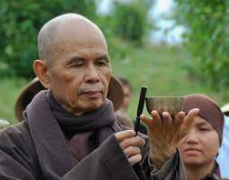
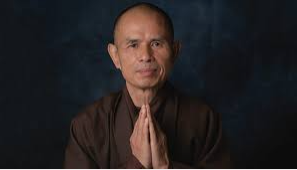
Can you see the cloud in the water? Thich Nhat Hahn – a tribute Part 2

He gently elevated a glass of water into the air. Hundreds of eyes followed Thich Nhat Han’s hand as it rose higher. Then the gentle, assured voice : Can you see the cloud in the water? 

Well not literally, but then the point was made; without the cloud there would be no water. The cloud and the water are inter-dependent. Can you see the cloud in the water?

So this week, more stories of meeting with our sadly missed Thich Nhat Hahn at his main retreat centre in Plum Village, France, a few select teachings and recounting co-presenting a remarkable cancer retreat in Germany with one of his monks, but first

       Thought for the day

    Breathing in I calm my body

    Breathing out I smile

    Dwelling in the present moment

    I know this is a wonderful moment

                           Thich Nhat Hahn


Plum Village

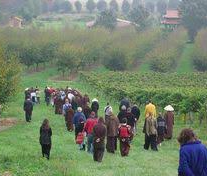
In 1982 Thầy, as he if known to his followers, found an old farm in the Dordogne Valley of southwest France. There, amid rolling hills and vineyards, they established a mindfulness practice center which became known as Plum Village after the 1,250 plum trees they planted in the rich soil. 

The existing buildings were dilapidated, but soon barns became meditation halls and sheep-sheds became dorms, with beds made of wooden boards balanced on bricks.

Over the next 4 decades, Plum Village grew into the largest Buddhist retreat center in the west, attracting people from around the world, with over 4,000 retreatants every summer and more than 10,000 visitors every year.


Visiting Plum Village

What better notion of a holiday than spending time in the company of a spiritual adept? And Plum Village is both beautiful, and serene. Serene and actually quite slow in pace. A bit like Club Med meets spirituality! 

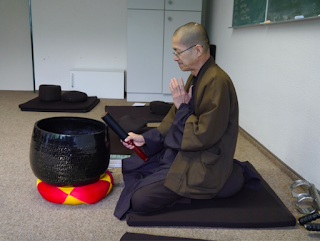
There is not much of a fixed program, although every 15 minutes a huge gong sounds out across the land and everyone stops for a mindful moment. Then there are group discussions for an hour after lunch and Thay alternates speaking in French with a translator or English with a translator.

Ruth and myself visited in 2010. 

Can you see the cloud in the water? 

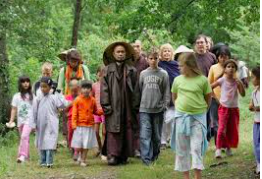
We also joined Thai in walking meditation and felt the entreaty to “walk gently upon the land”.

In fact, the strength, diversity and vitality of Thầy’s international community may be his greatest legacy of all. 

His aspirations and hopes live on in a thriving community of all ages, nationalities, and backgrounds, continuing to evolve and develop his teachings and practices, making them ever more appropriate to our times. 


Teaching – a true pioneer of mindfulness in the West

Thầy came from a Zen background but preferred to say he was “presenting the teachings of Early Buddhism in a Mahayana spirit”. 

His teachings on ‘everyday mindfulness’ and his style of walking meditation have been taken up and popularised by the secular ‘mindfulness movement’ and brought healing to millions around the world. 

He developed the practical notion of everyday mindfulness; mindful breathing, mindful walking, mindful dish-washing, teeth-brushing, cooking, or working, and the art of completely stopping and listening whenever the temple bell (or telephone) rang.


Some Excerpts

Mindfulness brings concentration. Concentration brings insight. Insight liberates you from your ignorance, your anger, your craving. When you are free from your afflictions, happiness becomes possible. How can you be happy when you are overloaded with anger, ignorance, and craving? 

Maybe intellectually people know that they should live in the present moment, but the habit energy that has been there for a long time is always pushing them to rush around, so they have lost their capacity to be in the present moment in order to lead their life deeply. That is why the practice is important, and talking is not enough. 

We can recognize happiness only against the background of suffering. It’s like when you recognize the white against the background of the black. Only if you have been hungry can you experience the joy of having something to eat. You learn from suffering, and against that background, you can recognize happiness. It is good to experience some suffering, because when you suffer you develop compassion and understanding.

Love, in Buddhism, always begins with yourself, before the manifestation of the other person in your life. The teaching of love in Buddhism is that when you go home to yourself, you recognize the suffering in you. Then the understanding of your own suffering will help you to feel better, and to love, because you feel the completeness, the fulfillment in yourself. So you don’t need another person to begin to love. You can begin with yourself.

True love does not just choose one person. When true love is there, you shine like a lamp. You don’t just shine on one person in the room. That light you emit is for everyone in the room. If you really have love in you, everyone around you will profit—not only humans, but animals, plants, and minerals. Love, true love, is that. True love is equanimity.

Our purpose is not to convert people to Buddhism. Our purpose is to live Buddhism as a path of understanding and love. You can continue to be a Jew, a Christian, or a Muslim, and you can do exactly the same thing as we do in the tradition of Buddhism. We use the Buddhist language and practice, you use the Muslim language and practice, but we arrive at the same result. That is why it can be called a global spirituality or global ethic.

Vietnam and home

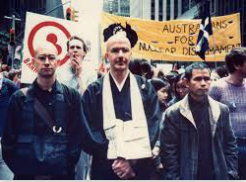
Having grown up in rural Vietnam and then joining a monastery, Thay became politically active and a major spokesperson for peace during the Vietnam War. 

At the end of the war he was forced into exile and made France his new home. 

Over the years, Thầy embraced and healed the pain of not being able to return to Vietnam. 

It was, he explained, “thanks to the practice I was able to find my true home in the here and the now. 

Your true home is not an abstract idea, it is a solid reality you can touch with your feet, with your hands, with your mind. It is available in the here and the now, and nobody can take it away. They can occupy your country, yes. They can put you in prison, yes. But they cannot take away your true home and your freedom.” 

Thay described the phrase, ‘I have arrived, I am home’ as the ‘cream’ of his practice and “the shortest teaching I can give.” He guided thousands of people who attended his retreats in Plum Village, to truly arrive and feel at home in themselves in the here and now. 

Healing Retreat in Germany            

In July 2011 Ruth and I were invited to co-present a meditation based, health and healing related retreat with monks and nuns of Thich Nhat Hahn’s tradition in their German retreat Centre out of Cologne. 

Imagine this… 

You arrive at a residential cancer retreat and the Zen monk co-leading announces everyone will water fast for the duration of the 7 days. 

News to us too! 

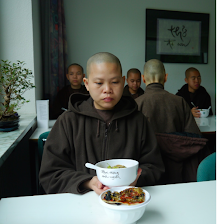
However, the monk had such presence and conviction (albeit based upon recent reading that fasting might be helpful in response to cancer!) it seemed to work – especially after we managed to include some very watery vegetable/rice soup in the menu. 

Anyway, it was a delight to work in the environment of dedicated monks and nuns and the participants left very happy. 

The whole week was presented very simply, very clearly, very directly. 

Mind you it did take a little getting used to the head monk nodding off while I was talking with the group and he was sitting out front with me. 

No place for egos! 

The whole thing was quite memorable to say the least. 

One new technique to come from the retreat: combining deep relaxation with a contemplation: relaxing each part of the body deeply while contemplating gratitude for all that part of the body does for you and for others.

Later that same year, I co-led a meditation training and retreat with that same monk and others from Plum Village at the Foundation’s Yarra Valley Centre. That too was a wonderful few days. 

The Recommendation

Do not put it off! 

If you can, seek out spiritual leaders and spend time in their company. 

Listen to their teachings in person when you can.

If you do not have your own main teacher as yet, it makes sense to shop around, check out possibilities, take your time and then commit. It is very hard to make serious progress on the spiritual path without sticking to one main teacher.

If you do have your own main teacher, do not become distracted by dharma shopping – feeding doubts and dissatisfactions by going around checking out other teachers – but judiciously select those aligned with your own path and benefit from their experiences, realisations and insights.

What a pleasure to have spent time with Thich Nhat Hahn – one of the genuine greats of our time!


25 January 2022

Thich Nhat Hahn – Pirates, Boatpeople and a Meeting in Melbourne – A Tribute

Some rare beings embody what it is to live a life completely devoted to the spiritual path and the betterment of others. 

Thich Nhat Hahn, a humble yet extra-ordinarily influential Vietnamese monk, was once such exemplar. 

Global spiritual leader, poet, and peace activist, Zen Master Thich Nhat Hanh was renowned for his powerful teachings and bestselling writings on mindfulness and peace.

Having experienced a stroke in 2014 and having been unable to speak since, it is no real consolation to say we knew he might die soon. 

His death leaves a gap that will be hard to fill by any one person and a sadness that will be felt for some time. 

His direct influence, his smile, his presence, his radiant inner peace is no more in present time. 

True, he leaves a wonderful legacy, largely through his advocacy for peace and mindfulness, but there is something about the finality of the loss when death arrives. 

The International Plum Village Community of Engaged Buddhism has announced 

Our beloved teacher Thich Nhat Hanh has passed away peacefully at Từ Hiếu Temple in Huế, Vietnam on 22nd January, 2022, at the age of 95.

We invite our global spiritual family to take a few moments to be still, to come back to our mindful breathing, as we together hold Thay (the Vietnamese word for teacher by which he is affectionately known) in our hearts in peace and loving gratitude for all he has offered the world.

In tribute to a man held in great respect by people of all traditions, the next 2 blogs will recount 2 remarkable meetings but first,


    Thought for the day

         His demeanour, light as a butterfly. 

         His steps, solid as a water buffalo. 

         His joy at being alive 

         As palpable as the awakening morning. 

         Fully present. 

         His life, a teaching.

              Gary Gach on Thich Nhat Hahn


A Caution

This true story does contain graphic details and may distress some people

The Context

i) The boatpeople

Following the Vietnam war around 800,000 boatpeople braved over-crowded boats, thirst and starvation, storms and pirates to flee to other countries. Many made it to Australia, yet the UN estimates 200,000 to 400,000 people died at sea. 

In 1981, 452 boats carrying Vietnamese boat people arrived in Thailand carrying 15,479 refugees; 349 of the boats had been attacked by pirates an average of three times each. 228 women had been abducted, many who survived had been raped and 881 people were dead or missing. 

ii) The teacher

While recovering from my leg amputation in 1975, I had the good fortune to come across Thich Nhat Hahn’s book The Miracle of Mindfulness, first published in that same year. Thay as he is known, writes so eloquently, so simply, so directly. 

The book informed my own practice and recovery. 

Washing the dishes has never been the same since. 

I love doing them. 

They remind me of Thay and they remind us that each moment holds within it an opportunity to work toward greater self-understanding and peacefulness – or anger and frustration if you prefer!


Then in 1987, Thich Nhat Hahn – a serious Buddhist scholar, published his seminal biography of the Buddha, Old Path, White Clouds. With its lyrical language and accessible Buddhist teachings, it became a mega-bestseller and has been published in over twenty languages.

Both books became standard recommendations when our cancer groups and meditation retreats began. 

Thay has definitely been one of my spiritual heroes.

The Meeting

Travelling as this is being written I cannot be sure of the date. My guess is it was late 80’s. But I sure do remember the meeting! One does not expect a teaching from a spiritual hero to be so explosive that physical violence seemed a real possibility.

My invitation came courtesy of someone who knew of my work with mindfulness and meditation and I was one of only a handful of non-Vietnamese in an audience of around 100, all gathered for an afternoon with Thich Nhat Hahn. I was excited! 

It turned out the audience was primarily Vietnamese refugee boatpeople. 

Thay was introduced by an incredibly beautiful and self-assured woman. 

Thay himself is a very small, very quiet person with a huge presence. 

The crowd was restless, even agitated from the beginning.

The agitation built rather quickly as Thay first spoke of the benefits of mindfulness and then moved on to address the elephant in the room – the pirates. 

At the time, the mayhem created by the pirates was well known and it transpired later Thay was travelling to countries where refugees had settled with the intention of helping relieve their suffering. 

This was the Melbourne leg of the tour!

The message was simple. Stay with the anger, the blame, the rage and continue to suffer personally, or learn to forgive and possibly move on a little and be free to live again. 

Simple message. Incendiary effect.

As the forgiveness message was developed, a corresponding agitation grew and rippled through the audience. I was sitting in the middle of the small hall in which the crowd was rapidly becoming electric. Men were rising in their seats muttering and cursing, women were calling out, and the very real threat of violence was building. Never been in a meeting like it…

The offended 

Finally, a man just in front of me exploded, jumped to his feet and hurled Vietnamese abuse at Thay. The moderator – the beautiful woman – calmly asked him to speak in English! The man switched without missing a beat and I suspect backed up a little to start again…

“How dare you suggest we forgive! 

What gives you the right to speak in such a way to those of us who lost so much.”


The man was screaming and the man beside him was holding him as if to prevent him lunging forward at Thay.

“My family was attacked by pirates. 

They bound me then went to rape one of my daughters. My wife tried to intervene. They shot her and threw her overboard. Then they raped my daughter, shot her and threw her overboard. My younger daughter they raped but let her live. 

How dare you talk to me of forgiveness!”


I had never seen a good idea – that of forgiveness – so powerfully challenged in real life. 

The force of this heart-broken man, the anguish and pain in his voice combined with a rage that was palpable physical. The force of his words; if he had hit Thay, it would not have been much different. And he was not alone; pretty well everyone in the room was at breaking point. 

I waited with some apprehension to see how Thay would respond. Was it possible to turn this around? To transform the energy that was so angry? Was he even going to get out of the hall in one piece?

The Response

I was close enough to observe. Thay was visibly moved and in my own impure observation, a little taken aback. But he was seated as he spoke and he paused. He very deliberately sat back in his chair– just a little – and consciously breathed. I could see it and it left an indelible impression. He returned to his breath; took a few almost imperceptibly deliberate, steading breaths, held his silence for just a few moments and the began to speak in the same calm and steady voice he had been using before the tirade.

These were the days before talks were routinely recorded and it was no time to be taking notes, so I am not quite sure exactly how he did it. He did begin by acknowledging the man’s pain… of course anyone in his situation would be devastated and suffering deeply. He did this with such open sincerity and for long enough that the man began to listen.

Then somehow he skilfully shifted to the pirates and speculated on what sort of life they had led to get to where they could perpetrate such horrors on others. 

As the enraged man settled a little more and the conversation could advance, Thay pointed out how these pirates started as fisherman who lived simple subsistence lives, totally dependent on the sea for food. 

When overfishing from outsiders depleted their food sources and their own families faced starvation, they turned to progressively more aggressive ways of making a living.

There was no pretence that what the pirates did was OK, just an invitation to be a little understanding. An invitation to rethink the context of the trauma they created. An invitation to compassion.

Then Thay moved on to ask the man about how it felt for him personally to suffer so much. At this point the man moved from rage to tears. Between sobs, he spoke fitfully of how much he loved his wife and daughters and of all that had been lost. The mood in the hall by now was also swinging as the audience was also caught in the feeling of collective pain.

Finally – why not forgive? Maybe it is possible? It will not change the fact of what you have been through, but maybe it will free you to live and love more fully once again???

The Aftermath

I do not know how the man’s life unfolded from there; I do hope he found some peace amidst what were extra-ordinarily difficult times.

But for myself, I had witnessed an incredible example of how to be with someone in full on rage; how staying calm and centred made it possible to engage empathetically and compassionately in the face of what seemed initially to be an overwhelming challenge.

While never having a similar confrontation, my work with people impacted by major illness and loss created many highly emotional situations. So I am pleased to be able to retell this story and to acknowledge that Thich Nhat Hahn provided a template for how to be with someone in extreme circumstances.

Thich Nhat Hahn’s list of accomplishments 

is almost unbelievable and well worth reading – LINK HERE. Staggering actually. What a man! What a pleasure to have had some small connection.

In the next blog, visiting Plum Village, listening to Thay in person, walking mindfully and presenting retreats with his monks…

17 January 2022

The essentials for radical healing – hope, belief and technique

During my decades of working with people affected by cancer, we observed many issues that were regarded as difficult or impossible to manage which actually resolved in large part or even completely disappeared. Chronic pain, sleeplessness, anxiety, depression, PTSD; the list actually does go on… And this is not being immodest – our groups were presented by an excellent team and involved a multi-layered, fully integrated approach that seemed to work for many people. You could describe this as radical healing.

Every now and then a new research article comes along that provides an explanation, an insight into something that has been observed like this over time, and in doing so, points to a whole range of new possibilities.

The research in question addresses chronic pain. It demonstrates how a combination of mindfulness and instruction in how underlying stressors and psychological contributors to persistent pain as well as conditioned pain responses and fear avoidant behaviours outperform other forms of treatment for chronic pain.

So this week we examine the insights this specific research provides, and then examine the more general question – what is the potential for this combination to work for other conditions? But first

          Thought for the day

Even in the greatest yogi, 

Sorrow and joy still arise just as before. 

The difference between an ordinary person and the yogi 

Is how they view their emotions and react to them.

An ordinary person will instinctively accept or reject them, 

And so arouse the attachment or aversion 

That will result in the accumulation of negative karma.

A yogi, however, perceives everything that rises 

In its natural, pristine state, 

Without allowing grasping to enter their perception.

                                               Sogyal Rinpoche

 FIRST THE SPECIFIC EXAMPLE OFFERED BY BACK PAIN

64% pain free six months after new treatment

Chronic back pain is the leading cause of disability worldwide. In the United States, patients spend up to $300 billion each year to treat the condition. However, common therapies such as surgery and steroid injections intended to address the physical origins of back pain have not been clearly proven to work in randomized clinical trials.

Researcher Dr. Michael Donnino : “The current paradigm of pain management focuses mostly on treatment of a physical origin of pain, however, in many cases of chronic back pain a physical source of pain cannot be identified. Our group focused on the hypothesis that non-specific back pain is the symptomatic manifestation of a psychological process, substantively driven by stress, repressed emotions and other psychological processes. The exact mechanism remains unclear, but an analogy could be made to other known effects of acute emotional states, such as how the emotion of embarrassment may result in the capillary vasodilation we know as blushing.”

Donnino and colleagues’ experimental 12 week program, termed Psychophysiologic Symptom Relief
Therapy (PSRT), is designed to address the psychological aspects of chronic pain. 

Treatment strategies include educating patients about the links between stressors and pain. 

Armed with this knowledge, participants learn healthier ways to process stress and express emotions. 

The program also focuses on desensitization or reverse conditioning to help patients break the associations that often are formed with triggers of pain such as bending or sitting.

“Often these triggers are assumed to be the cause of pain, but they are perhaps better described as associations that can be unknowingly conditioned in a way similar to how Pavlov conditioned dogs to salivate to a bell by pairing the bell with food,” Donnino noted. “Our program works to reverse these conditioned responses and thus improve pain and pain disability.”

Eight weeks of mindfulness-based stress reduction training, or MBSR, is included in the program.

Participants in the study were randomly assigned to receive either the novel 12-week PSRT intervention, eight weeks of MBSR only, or usual care under the guidance of their physicians without influence from the study team. 

After just 4 weeks, researchers saw an astonishing 83% decrease in reported pain disability in the PSRT group compared to 22% and 11% in the MBSR and usual care groups respectively. With regard to pain bothersomeness over the same time period, the PSRT group had a 60% drop compared to 8% and 18% decreases in pain bothersomeness for the mindfulness and usual care groups, respectively.

The PSRT group was superior to both usual care and MBSR for the primary endpoint of pain disability at
every time interval. 

Moreover, at the end of 6-months, 64% of patients with chronic back pain in the PSRT group were completely pain free (reporting 0 out 10 on a pain scale) whereas only 25% and 17% reported being pain free in the mindfulness and usual care arms, respectively.

Donnino said “When patients recognize the relationship between the mind and their physical pain, this orientation sheds new light and provides them a basis to engage with the multifaceted program that works interchangeably to improve pain and disability. This study shows that our program has the potential to be highly beneficial when compared to both usual care as well as usual care plus additional treatments such as MBSR.”

The research details - with link to the original paper:

Donnino, M W et al: Psychophysiologic symptom relief therapy for chronic back pain: a pilot randomized controlled trial, PAIN Reports: Sept/Oct 2021 - Volume 6 - Issue 3 - p e959 

THE WIDER IMPLICATIONS

People often came to our cancer groups feeling hopeless, having the belief there was nothing that could be done for them or that they could do for themselves; plus they knew no self-help techniques with the potential to effect change. The groups first provided a paradigm – a way of thinking about or understanding their situation that made sense of how their problems had arisen, what was going on at a physiological, psychological and spiritual level, and provided real hope based on the experience of others that they could recover. Then we taught them a range of self-help techniques, along with ways to evaluate and get the best out of conventional medical treatments and appropriate natural therapies. 

My contention is this study helps explain why people in our cancer groups reported a wide cross section of excellent results. The health education we provide helped make sense of what they were experiencing – where their issues came from, what had been perpetuating them, and how they might diminish or drop them altogether.

Then we taught them a range of self-help techniques, along with ways to evaluate and get the best out of conventional medical treatments and appropriate natural therapies.

This new piece of research triggered the insight : the essential elements required for major self-healing are hope, belief and technique.

The contention is this study helps explain why the people in our cancer groups did report such a wide cross section of excellent results. As in the study, the health education we provided helped make sense of what our people were experiencing and what could be done about it. This provided belief. 

Armed with this knowledge and the belief it created, they still needed tools (things to do) to break old, unhealthy patterns and to create new healthy ones that heal. So we encouraged good nutrition, affirmations, imagery, deep relaxation, mindfulness, contemplation on the beliefs, the meaning and the purpose of their illness, and of course, meditation as the mainstay.

Their belief opened the way to hope, and once they began to engage with the techniques and personally felt the benefit, their hope became solid. 

With hope, belief and technique all actively engaged, radical healing flows.

THE SADNESS

The programs the team and I offered at the Foundation for decades are to my knowledge, no longer available in their entirety. Happily, individual elements of them are widely available – as in the freshly researched and excellent pain management approach that combines a good paradigm with mindfulness – but I wonder when it might be that rather than testing just 2 things, the whole gamut of possibilities is investigated? 

We were unable to obtain funding for such research back in the day; what will the future bring? 

A WIDER RELEVANCE

What we are discussing here is the basis of self healing. These 3 elements of hope, belief and technique apply to a wide range of disease conditions and symptoms that accompany those diseases. This is why we observed people turning around sleeplessness, anxiety, depression, PTSD and so on. 

My own hope is we will see more research in these other areas, and a wider uptake of the principles at a mainstream level. The potential is vast… 

POSSIBILITIES

i) The books

The program we used is detailed in my book You Can Conquer Cancer. There is a specific chapter on pain management and all the other techniques are clearly set out.

The audiobook is available for downloading  HERE. Many people tell me they worked it out for themselves from this book.

You might find extra help with meditation from my book Blue Sky Mind

Also, The Mind that Changes Everything examines how the mind works and how we can use it to best advantage. It includes details of 50 Mind-Body Medicine techniques.

ii) The downloads

Downloads are available detailing every aspect of the program and can be obtained HERE

iii) The App – Allevi8

Allevi8 is a mindfulness and meditation based practice app where you can access specific healing techniques to address the symptoms associated with significant physical and mental illness. Deep relaxation, mindfulness, contemplation, guided imagery and meditation are all featured. 

With options to listen to the voice of my wife Ruth or myself, it has short video introductions setting out the paradigm for each of the symptoms and many other features including access to one-to-one online teaching from excellent meditation teachers.

Download from your app store – Allevi8.

 Bon Chance!

RELATED BLOG

If you are interested in my rather radical way of treating my own back pain, here it is…

Something I would not recommend


31 December 2021

10 do-able secrets of those who flourish

What helps you to flourish? A New Year is dawning and each year the 1st of January reminds us to aspire to be the best person we can be, and to consider how we might be of most help to those around us.

So this year – multiple choice! Based upon observation and reflection, here are 10 things people do who go beyond having “a good year”, go beyond “being OK” and who actually flourish, but first

     Thought for the day

To investigate is to contemplate with a silent mind. 

It is to illuminate that which is cloudy or confused

—to explore and to discover 

What we have not yet noticed or understood. 

This kind of deep inquiry provides us with the tools 

To free the mind from suffering 

And the pitfalls of an unexamined life.


                   Narayan Helen Liebenson


What do you aspire to for 2022?

Some people are naturally capable, but many work quite hard at making the most of their lives. What helps you to flourish? How relevant are the following things people do who are flourishing? 

1. Remaining curious and open; constantly seeking new ways to grow

It all begins with the mind. Maintaining an open, curious, enquiring mind means life will never be boring; it will always be interesting and you will continually make new discoveries and evolve.

2. Being gentle with yourself

It may be well and good to aspire to becoming a Saint, but in the interim we need to live with our strengths AND our weaknesses. Learning to accept our weaknesses and committing to work on them, while making the most of our strengths is a sure recipe for flourishing.  

3. Aspiring to being non-judgemental

It is so easy to recognize the faults of others. Some seem to value pointing out the faults of family, friends and colleagues, and maybe there is a time as a teacher where this is appropriate – particularly if the other person asks for direct feedback. However, in day to day life, it is so hard to appreciate someone else’s circumstances and being judgemental is highly fraught. 

4. Practising gratitude

Maybe the biggest secret of them all. 

The power of gratitude is immense. 

It empowers others when we acknowledge and thank them, it makes every cell in our own bodies sing when we get fully into it; truly one of the best things to do – and so easy... 


5. Exercising self-care through personal discipline 

Externally imposed discipline can be tough unless you have really bought into it. Self imposed discipline involves recognizing what is good for self – and doing it. Personal discipline is a personal kindness. If you waver, go back to what you value, consider how important it is to you and what it will take to accomplish it. From this comes the discipline to eat good food and meditate – plus all the other self-care tricks that work for you personally…

6. Seeking out good company

While our lives are enriched by variety, we are social animals and need to feel connected to kindred spirits. For example, being seriously committed to a healthy lifestyle may well make you different to some of your friends, family or colleagues. While we can manage a fair amount of this, it is important to avoid being overwhelmed by opposing views and to seek support from the like-minded. Clubs, groups, communities – where does you support come from???

7. Living in accord with values and ethics 

While attempting to avoid sounding like a preacher, it is clear, happy people who flourish have a strong sense of direction and purpose and this direction is based upon personally sound values and ethics. Need a reality check? Do you go to work and need to park your ethics at the front door? Do any relationships cause you to cringe internally? Do you eat and drink in accord with your values and ethics? Can you recognize some food and drink is ethical and valuable not for its nutritional content necessarily, but purely because you can enjoy it and celebrate it occasionally and that is OK? New Year is definitely an excellent time to review our values and ethics and affirm our commitments.

8. Developing generosity

Holding onto stuff is inhibiting. It feeds the sense of there not being enough, depletes trust, and creates fear and worry. This in turn causes an internal tightness, depletes the immune system, inhibits healing. And it feels mean… 

Generosity is expansive. It creates hope and optimism, builds energy, strengthens the immune system and fosters healing. 

If being generous feels tough, start simply. Give away something you do not need or want; then build slowly. 

9. Maintaining a sense of humour

Let us face it; so much of life is a mystery, people are so curious, really weird stuff is happening all the time; may as well just burst out laughing. As an old friend used to say repeatedly: “Don’t sweat the small stuff. It is all small stuff.” And it may be a cliché, but laughter really is the best medicine; and one of the great things about the internet is it provides so many things to get us laughing!

10. Recognising who you are – with modest pride

As a human being, any human being, you are totally amazing. Totally amazing. No need to say any more except to encourage a gentle, reality based self-pride. You are totally amazing; might as well just accept it – and enjoy the fact! 


Happy New Year to all

May 2022 be a year of blessings, good health and joy, not too much drama – or melodrama; a year of meaning, purpose and flourishing!